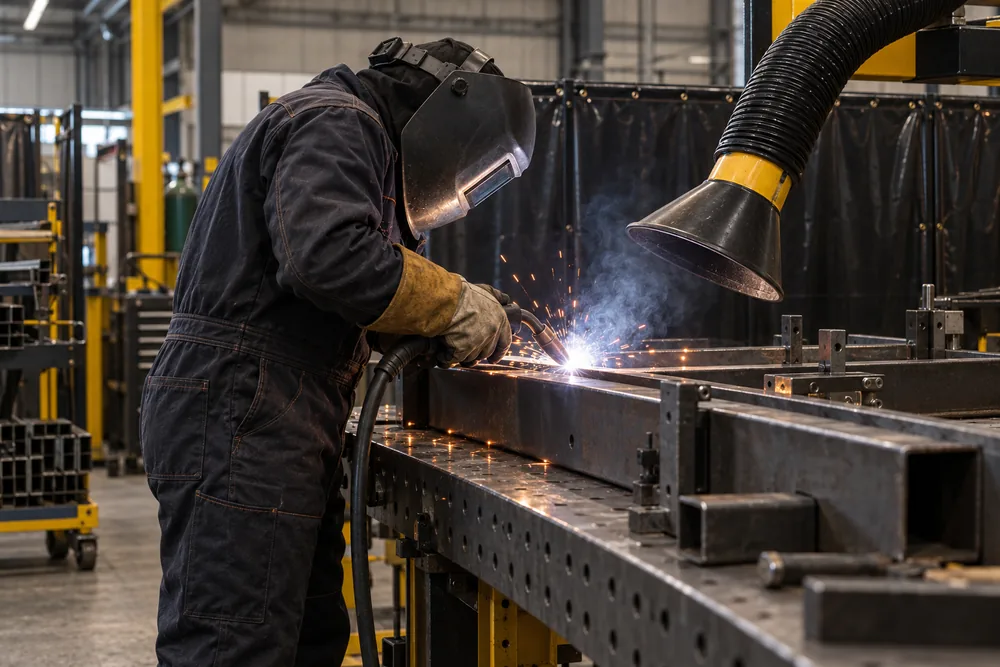
Welding With A Defined Purpose
Welding joins materials through a controlled process that must suit the base metal and the intended duty of the component. New fabrication, replacement of a damaged part and repair of an existing assembly need different decisions. The first question is whether the proposed weld is an appropriate solution to the underlying requirement.
Commercial enquiries can include frames, brackets, plant-related assemblies and welded subcomponents. Where the weld forms part of a load-bearing structure, the structural design and execution specification take priority. A weld that looks substantial is not evidence that the joint has the required strength or fatigue performance.
Tell us whether the item can be removed for workshop work or needs assessment on site. Some tasks are better completed by replacing a component or using a designed bolted connection. For a full assembly rather than an isolated joint, see our metal fabrication service.
Material Identification And Joint Preparation
The steel grade, thickness and existing condition influence how a joint can be made. Unknown material, corrosion, contamination and previous repairs can all affect feasibility. Photographs are useful for an initial review, but they cannot establish material properties or prove that a repair is safe.
Joint preparation needs access to sound material and space for the selected welding process. The details may require edge preparation, a root gap or a particular sequence. Coatings near the weld may need removal, with appropriate controls for the substances released.
Distortion matters where the finished item must remain flat or fit another assembly. Restraint, weld sequence and heat input need thought before welding starts. Grinding a joint flush should only be done where the agreed design and finish requirements permit it.
Choosing The Process And Quality Requirements
The welding process should follow the material, joint geometry, environment and required quality. MAG is widely used for suitable steel fabrication, while TIG and manual metal arc methods have other applications. A process name alone does not establish suitability or the competence needed for a particular joint.
For structural steelwork, the execution requirements and welding quality arrangements should be defined in the project specification. BS EN ISO 3834 provides a framework for quality requirements in fusion welding. Confirm the relevant procedure, personnel qualifications and inspection scope with the appointed fabricator rather than accepting a general statement that welding is approved.
Inspection starts with the specified acceptance requirements. Visual examination can identify some issues, while additional non-destructive testing may be needed for particular joints. The inspection method and extent should follow the design and applicable specification, rather than a promise that one test proves every aspect of a weld.
Fume Controls And Hot-Work Planning
Welding fume requires suitable exposure control for both workshop and site tasks. HSE’s welding guidance explains the need to control fume, including suitable extraction for indoor welding and respiratory protection where required. General ventilation alone should not be treated as an adequate control.
At an occupied commercial site, the assessment must also consider people nearby, fire risks, shielding, combustible materials and any permit-to-work system. The work area may need segregation and checks on adjacent voids or surfaces. A hot-work permit records controls but does not replace a task-specific risk assessment.
Equipment must be isolated where necessary before repair work. Tanks, containers, confined spaces and contaminated components introduce hazards that cannot be resolved by a routine welding visit. Explain the setting honestly at enquiry stage so that unsuitable work is identified before mobilisation.
A Sensible Welding Enquiry Process
Start with the component’s purpose, material if known, approximate dimensions and clear photographs. For a repair, describe the damage, service history and any repeated cracking. Include drawings and identify whether the item carries a structural load or forms part of machinery.
The next stage is a feasibility and scope review. Agree whether engineering input, material checks or dismantling are needed, along with the method, finish and inspection requirements. Confirm whether work is priced for the workshop or for a controlled site environment.
Once the scope is approved, preparation and welding follow the agreed information. Inspection, coating reinstatement and handover complete the task. Do not return equipment to service until the responsible person has accepted the work and completed any required checks.
What Affects Welding Costs
The cost of welding depends on preparation, access, joint size, material, procedure requirements and inspection. Removing paint, dealing with corrosion or dismantling an assembly can require more time than the weld itself. Site segregation and operational shutdown arrangements may also affect feasibility and cost.
A clear description helps avoid a quote for an unsuitable repair. Send your Leeds welding enquiry with the site postcode, photographs available and the proposed working window. We can then focus the enquiry on the right technical questions.