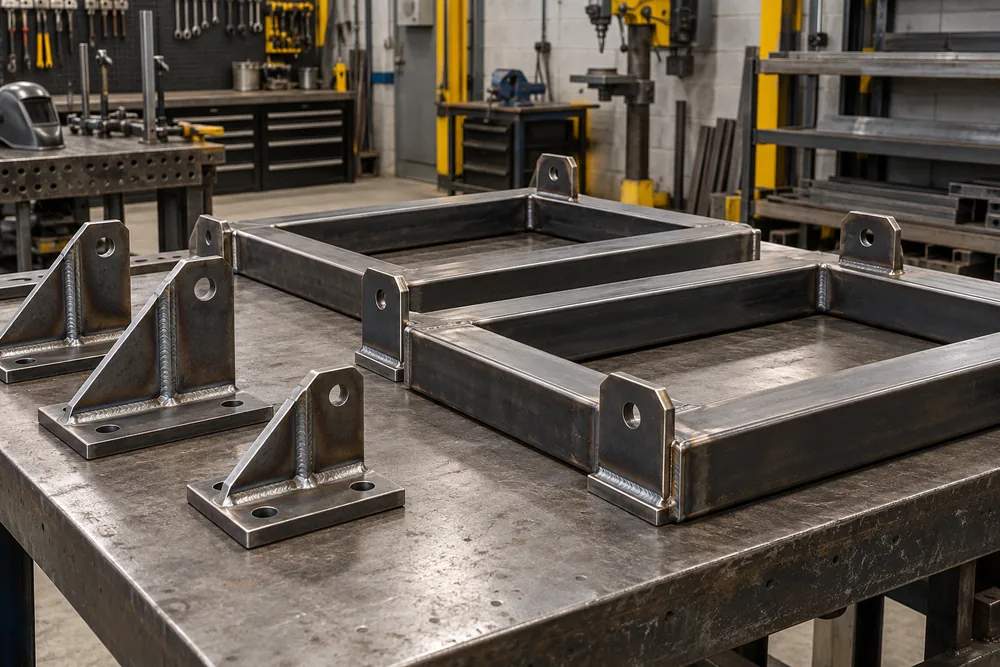
Choose The Component Before The Process
Metal fabrication turns plate, sheet, tube and sections into usable components through cutting, forming, joining and finishing. The useful question is what the finished item must achieve. A support frame, protective cover and equipment bracket can look similar on a sketch but have very different strength, access and maintenance requirements.
We help shape commercial enquiries around intended use, dimensions, quantities and interfaces. Include the environment, expected loads and anything the component must fit around. A useful brief also says whether the metalwork is exposed to impact, regular cleaning, outdoor weather or a corrosive process.
This route suits facilities managers replacing site fittings, contractors coordinating a fit-out and manufacturers buying fabricated assemblies. For load-bearing building components, use our structural steel page. For predominantly folded panels, see sheet metal fabrication.
Materials, Connections And Finishes
Mild steel is often appropriate for fabricated frames and brackets, but the grade and section must follow the design requirements. Stainless steel may suit some cleaning or corrosion conditions, while aluminium can be useful where weight matters. Availability, stiffness, joining method and the operating environment all influence material selection.
Bolted connections can allow an assembly to be dismantled or adjusted. Welded construction can produce a rigid unit, but the design must allow for access to the joints and the effect of welding heat. State whether the item needs to pass through doors, fit into a lift or be assembled inside a plant room.
A finish should be specified by its function. Paint, powder coating and galvanizing have different preparation and detailing needs, and not every system suits every exposure. Agree which faces need a cosmetic finish, which contact surfaces must stay uncoated and how damaged finishes will be repaired after installation.
Dimensions That Make An Assembly Fit
An overall width and height rarely provide enough information for a repeatable part. Hole centres, mounting faces, datum points and clearance around moving equipment all need attention. A dimensioned drawing should distinguish dimensions that control fit from those that can tolerate normal manufacturing variation.
If a replacement component must match an existing item, supply photographs and a drawing or arrange a measurement review. A worn or distorted sample may not represent the original geometry. Confirm whether the replacement should reproduce the sample or correct an identified problem.
For batches, agree a drawing revision and acceptance criteria before production. A first-off inspection or trial assembly can identify a fit issue before it is repeated. Keep changes controlled so that later replacements match the same approved information.
Safety And Relevant Requirements
Metalwork supplied as work equipment or a machinery-related component needs a clear safety scope. The Provision and Use of Work Equipment Regulations 1998 apply to the use of work equipment, including suitability and maintenance, as explained by HSE’s PUWER guidance. A fabricated guard does not make an entire machine compliant by itself.
The buyer should identify any hazards the assembly is intended to control and involve a competent person where machinery access or guarding is affected. Structural construction products may instead fall within the BS EN 1090 framework, depending on their intended function. The category of the component matters more than its appearance.
Welding and cutting also need task-specific exposure controls, safe handling and suitable equipment. If installation forms part of construction work, the CDM duties need to be addressed. Confirm the relevant documentation and inspection scope rather than assuming that every fabricated item follows the same route.
From Enquiry To Finished Metalwork
First, send the site location, sketches or drawings, required quantity and an explanation of the component’s purpose. Next, agree materials, interfaces, tolerances and finish. The quotation should state whether design, measurement, delivery and installation are included.
After the drawings are approved, material is cut and formed, parts are fitted, and the joints are completed to the agreed specification. Inspection should check the dimensions and features that determine acceptance. Finishing follows preparation suitable for the chosen coating system.
Cost depends on material, detail, setup time, batch size and inspection, rather than on dimensions alone. Difficult-to-reach welds, cosmetic preparation and repeated handling can add work. Describe your metal fabrication requirement with a target date so that feasibility and scope can be reviewed together.